Mobile app monetization strategy is all about turning your app into a sustainable source of revenue. Without the right plan, even the best apps can struggle to make money and grow. If you are investing in a mobile app development service, understanding monetization early helps you design features and user experiences that directly support long-term profitability.
Did You Know?
According to Statista, global consumer spending on mobile apps reached roughly US $40 billion in the second quarter of 2025, an increase of around 11 % year‑over‑year.
Without a clear plan, even high‑quality apps can struggle to convert downloads into this kind of revenue. The foundation of successful monetization lies in user experience. Apps that feel smooth, engaging, and relevant encourage users to spend more time and explore paid features, which in turn boosts your earnings naturally.
In this blog, you will learn why monetization is essential for long‑term success, how user experience influences revenue, the main ways to make money from your app, including subscriptions, in‑app purchases, and ads, and how to choose the right monetization strategy that helps maximize your app’s earning potential.
How Do iOS and Android Differ in Monetization?
When choosing which platform to launch or prioritise your app on, it’s crucial to understand how iOS and Android differ in monetisation behaviour, ad formats, payment methods, and user spending habits, as your platform choice directly impacts your revenue strategy.
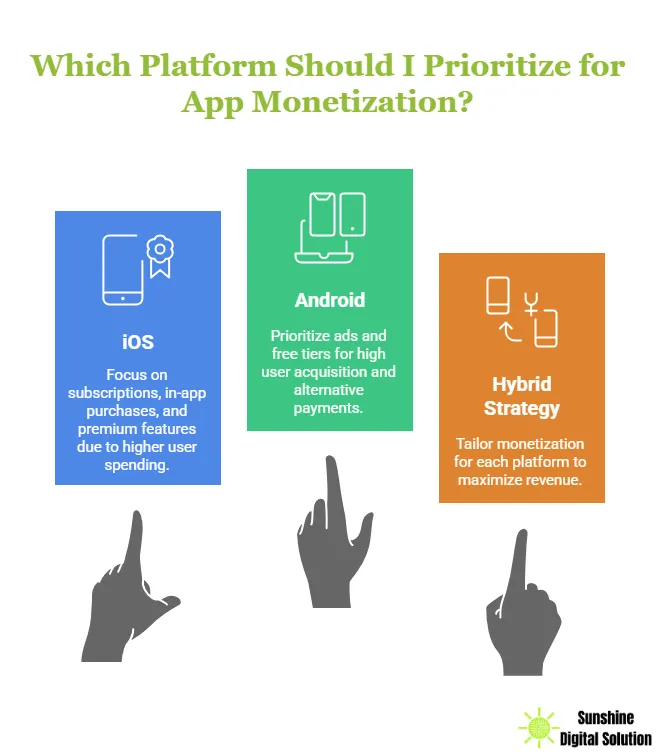
Comparison of iOS and Android for app monetization strategies.
Monetization Behaviour & User Spending
Android dominates globally in terms of device numbers, meaning more potential users in many markets. On the flip side, iOS tends to yield higher revenue per user in mature markets because users are more willing to pay for apps, subscriptions, or in‑app purchases.
Meanwhile, Android’s strength often lies in scale, especially in regions where ad‑supported and free‑to‑download models are more common, but iOS usually provides higher value per user.
Ad Formats, Payment Methods & User Habits
On Android, you may find a greater variety of payment options, including carrier billing, local wallets, or alternative app stores in some regions. Free apps monetised via advertising often work well here.
On iOS, the built‑in app‑store experience and user trust in payment flows make subscriptions and premium upgrades more viable.
The ad formats you choose may also differ: interactive rewarded ads and in‑app purchase upsells often get better traction on iOS. In contrast, broader ad networks and volume‑based ad strategies may work better for Android in specific markets.
Why Platform Choice Impacts Revenue Strategy?
Because of these differences, your monetisation strategy must adapt to each platform. Launching on Android only, but expecting iOS‑like spending can underperform. Launching on iOS only in markets that prefer free apps and ads may reduce traction.
- On iOS, focus on subscriptions and in‑app purchases, premium features, and smooth payment UX.
- On Android, prioritise ads and ad-driven free tiers, high user acquisition, localisation, and alternative payments.
- Many successful apps use a hybrid strategy, tailoring monetisation for each platform, adjusting pricing regionally, and tracking ARPU and retention to optimise revenue.
What are the Core Principles for App Monetization Success?
Monetizing an app successfully starts with focusing on your users and their experience. Here are the key principles to follow:
1. Deliver Exceptional User Experience
- Create a clean and intuitive interface
- Provide a smooth onboarding to guide new users
- Release regular updates that add value and fix issues
- Offer responsive support to build trust and loyalty
2. Use User Segmentation for Targeted Monetization
- Identify different user groups and their behavior
- Tailor monetization methods to each group, such as ads, in-app purchases, or subscriptions
- Focus on strategies that enhance satisfaction while boosting revenue
3. Track Performance with Analytics
- Monitor user behavior, retention, and engagement
- Analyze purchase patterns and ad performance
- Use data insights to refine features and optimize revenue streams
4. Optimize Your App Store Presence
- Use relevant keywords for app store optimization (ASO)
- Maintain high ratings and positive reviews
- Craft an appealing listing to attract users who are more likely to pay for features
Following these principles helps create a strong foundation for monetization, making it easier to convert users into paying customers while keeping them engaged and satisfied.
What Are the 12 Most Effective Mobile App Monetization Strategies in 2026?
There are multiple ways to earn from your app, and the best approach depends on your audience, app type, and goals. Understanding each strategy helps you choose the right mix and maximize revenue while keeping users happy. The following are 12 proven strategies that can help you maximize revenue while keeping users engaged and satisfied.
1. Freemium Model
The freemium model is one of the most popular ways to monetize mobile apps. In this approach, your app is free to download and use for basic features, but users pay for premium features, advanced tools, or enhanced experiences.
How It Works?
- Users can access core functions of the app for free.
- Premium features, additional content, or advanced tools require a one-time purchase or subscription.
Examples
- Slack: Free version for small teams, premium plans for larger teams with advanced collaboration tools.
- Dropbox: Basic storage is free, but users pay for more space and additional features.
The freemium model works well for apps with broad appeal where users can see the value of premium features through extended usage. It is particularly effective for productivity, collaboration, and cloud-based apps.
2. Paid Apps (Upfront Payment)
In the paid app model, users pay a one-time fee before downloading your app. It’s a straightforward monetization approach that works best when your app offers strong value right from the start, such as premium games, professional tools, or exclusive content.
Paid Apps
How It Works?
- Users make an upfront payment to access the app.
- All features are typically included, with no ads or in-app purchases.
Marketing Challenges
Since users pay before trying the app, you need compelling visuals, reviews, and a strong reputation to convince them of its worth. App store optimization (ASO), influencer reviews, and demo videos can help build trust and drive downloads.
Examples
- Recipe Apps: Offer exclusive meal plans, nutrition insights, and ad-free cooking tutorials.
- Premium Games: Titles like Monument Valley or Stardew Valley charge upfront for a complete, high-quality experience without in-app ads or purchases.
Paid apps work well when your audience values exclusivity and premium content. However, clear communication about what makes your app worth the price is crucial for success.
3. In-App Purchases (IAP)
In-app purchases are one of the most popular and profitable monetization methods, especially for mobile games and lifestyle apps. This model allows users to download the app for free and then buy additional features, items, or content within the app itself.
 Key statistics showing the growth of mobile app monetization worldwide.
How It Works?
Users can spend real money to unlock extra benefits, such as:
- Virtual currency (coins, gems, or tokens)
- Premium items (skins, tools, upgrades)
- Exclusive content (extra levels, characters, or premium filters)
Example
Clash of Clans uses IAP to sell gems, which players spend to speed up construction or purchase resources. This model keeps the game free for most users while earning substantial revenue from dedicated players.
In-app purchases work best when they offer real value without breaking the core experience for free users. The goal is to create a balanced system where users feel motivated, not pressured, to spend.
4. Subscription Model
The subscription model provides recurring revenue by charging users regularly for ongoing access to content, services, or premium features. This approach works well for apps that deliver continuous value, such as streaming services, fitness apps, or productivity tools.
How It Works?
- Users pay a recurring fee, typically monthly or yearly.
- Subscriptions may include full app access, premium content, or exclusive features.
Example
- Netflix charges a monthly subscription for unlimited access to movies and shows.
- Spotify offers ad-free listening, offline downloads, and premium features for subscribers.
Subscriptions work best when your app provides continuous, tangible value. Regular updates, exclusive content, and personalized experiences help retain subscribers and maximize lifetime value.
5. In-App Advertising
In-app advertising allows apps to generate revenue by displaying ads to users while they interact with the app. It is one of the most common monetization strategies for free apps and works well when combined with other models.
Types of Ads
- Banner Ads: Small, static ads that appear at the top or bottom of the screen.
- Native Ads: Ads that blend seamlessly with app content for a less intrusive experience.
- Video Ads: Short videos, often rewarded, where users receive in-app benefits for watching.
- Interactive Ads: Ads that involve engagement, like mini-games or polls.
- Interstitial Ads: Full-screen ads that appear at natural transition points, such as between game levels.
Examples
- Social media apps like Instagram and TikTok integrate native and video ads within feeds.
- Free utility apps, such as weather or productivity tools, rely on banner and interstitial ads.
In-app advertising works best when ads are relevant, non-intrusive, and occasionally rewarded. Proper integration ensures revenue without frustrating users.
Sponsorship involves partnering with a brand or company to fund your app in exchange for content integration, visibility, or co-branded campaigns. This strategy works well for apps with a niche audience or strong user engagement.
How It Works?
- A partner brand provides funding, resources, or exclusive content.
- The app integrates the sponsor’s branding or features in a way that feels natural to users.
Examples
- Collabspace: Offers sponsored content and tools from partner brands to its creative user base.
- Spony: Connects influencers with sponsors, integrating branded campaigns seamlessly in-app.
Sponsorship works best when partnerships align with your audience and provide mutual value, maintaining engagement while generating revenue.
7. Data Monetization and Licensing
Data monetization involves generating revenue from the data your app collects. This can include selling anonymized user data, providing insights to third parties, or using data to enhance your own app experience. Licensing allows other companies to legally use your proprietary data for research, marketing, or analytics.
How It Works?
- Direct: Selling anonymized, aggregated user data to partners or third parties.
- Indirect: Using insights to improve user experience, boost engagement, or optimize in-app purchases.
Examples
- Yelp: Aggregates user reviews and location data to provide business insights to companies.
- TripAdvisor: Licenses travel and review data to partners, while also using it to enhance recommendations within the app.
Data monetization works best when user privacy is respected, and the insights derived improve the app experience or create value for third parties.
8. Crowdfunding and Donations
Crowdfunding or donation-based monetization relies on users voluntarily contributing to support an app. This model works best for apps with a strong community, social impact, or content that users value and trust.
How It Works?
- Users make one-time or recurring donations to help sustain the app.
- Crowdfunding campaigns can fund app development, new features, or ongoing operations.
Example
- Wikipedia: Relies almost entirely on user donations to maintain its free, ad-free platform and support content updates.
Crowdfunding and donations work best for apps with loyal users and a clear value proposition that encourages voluntary financial support.
9. Affiliate Marketing
Affiliate marketing allows apps to earn revenue by promoting third-party products or services. When users make purchases or take specific actions through the app, the app earns a commission. This strategy works well for apps with content, recommendations, or e-commerce integrations.
How It Works?
- The app integrates affiliate links or product promotions within content, features, or notifications.
- Users click or purchase through these links, generating commission for the app owner.
Integration Examples
- Travel apps suggesting hotels or tours through affiliate links.
- Shopping or deal apps that earn commissions from recommended products.
Affiliate marketing works best when the promoted products or services align with your app audience and add genuine value.
10. Commissions and Marketplace Apps
Marketplace apps generate revenue by taking a percentage of transactions that occur on their platform. This model works best for apps that connect buyers and sellers, service providers and clients, or facilitate any type of peer-to-peer exchange.
How It Works?
- The app acts as an intermediary and charges a commission or service fee for each completed transaction.
- Revenue grows as transaction volume increases.
Examples
- Uber: Takes a percentage of each ride fare from drivers.
- TaskRabbit: Charges a commission on tasks completed through the platform.
Marketplace apps succeed when they provide a secure, efficient, and reliable way for users to transact while taking a fair commission that reflects the value of the service.
11. Mixed and Hybrid Models
Mixed or hybrid models combine multiple monetization strategies within a single app to maximize revenue. This approach allows developers to diversify income streams and cater to different user preferences.
How It Works?
- An app may use freemium plus ads, offering free access with ads and paid premium features.
- Another method is subscriptions with optional in-app purchases for extra perks.
- The goal is to provide value to all users while optimizing revenue potential.
Tips for Testing and Monitoring
- Track revenue and engagement by each monetization method.
- A/B test different combinations to see what works best for your audience.
- Adjust features, pricing, or ad frequency based on analytics and user feedback.
Hybrid models work best for apps with diverse user behavior, allowing developers to maximize revenue while maintaining a positive user experience.
12. Emerging and Innovative Models
Emerging monetization models focus on creative, trend-driven approaches that go beyond traditional strategies. These methods leverage new technologies, user behaviors, and market trends to generate revenue in innovative ways.
How It Works?
- AI-driven monetization: Uses artificial intelligence to personalize offers, recommend products, or optimize pricing for users.
- Gamification: Integrates game-like mechanics such as rewards, challenges, or loyalty points to encourage engagement and spending.
- Other creative hybrids: Combining social features, augmented reality, or blockchain elements to offer unique monetization opportunities.
Examples
- AI-based shopping apps that recommend products tailored to user behavior.
- Gamified fitness apps that reward users with points redeemable for premium features.
- Trend-based social apps integrating AR or interactive experiences to drive engagement and monetization.
Emerging and innovative monetization models are ideal for apps looking to differentiate themselves, engage users in new ways, and experiment with modern technology to create sustainable revenue.
What are Common Monetization Mistakes?
Even the best apps can struggle to generate revenue if monetization strategies are poorly planned. Avoiding common mistakes can help maximize revenue and keep users satisfied.
1. Choosing the Wrong Strategy for Your App
- Not all monetization models suit every app. For example, a paid-upfront model may fail for casual social apps, while a freemium model works better for productivity or gaming apps.
- Align your strategy with app type, audience behavior, and user expectations.
2. Using a Non-Scalable Model
- Some monetization methods may work initially but fail as the app grows.
- Ensure your strategy can scale with your user base without compromising revenue or user experience.
3. Ignoring Analytics
- Without tracking user behavior, retention, and revenue patterns, it’s impossible to know which methods work.
- Analytics help optimize pricing, ad placement, and feature upgrades to improve revenue.
4. Relying on Ineffective Ad Networks
- Low-quality or irrelevant ad networks can frustrate users and reduce engagement.
- Choose ad partners carefully, prioritize relevance, and monitor performance regularly.
Avoiding these mistakes helps create a sustainable monetization strategy that grows with your app while keeping users engaged and satisfied.
What are the Best Tools and Platforms for Monetization?
Using the right tools and platforms can simplify monetization, optimize revenue, and help you make informed decisions.
1. Ad Networks
Ad networks help apps generate revenue by connecting them with advertisers. Popular options include:
- Google AdMob: Supports banner, interstitial, and rewarded video ads.
- Unity Ads: Ideal for mobile games with video ad integration.
- MoPub: Offers programmatic ad placements for advanced targeting.
- AppLovin: Focuses on user acquisition and monetization through ads.
- Tapjoy: Provides rewarded ads and offer walls.
- Facebook Audience Network: Extends Facebook ads into your app for relevant targeting.
2. Subscription and In-App Purchase Platforms
These platforms simplify handling recurring payments, subscriptions, and IAPs:
- RevenueCat: Manages subscriptions across iOS and Android with analytics.
- Paddle: Handles global subscriptions, taxes, and compliance.
- Monetag: Offers in-app commerce solutions and IAP management.
3. Analytics and Tracking Tools
Monitoring revenue streams is essential for optimizing monetization strategies. Track user behavior, retention, ad performance, and purchase patterns.
- Tools like Google Analytics for Firebase, Mixpanel, or Appsflyer help you make data-driven decisions and refine your revenue strategy.
Using these tools effectively ensures that your monetization strategy is not only implemented smoothly but also continuously improved based on real user data.
How to Choose the Right Monetization Strategy?
Selecting the right monetization approach is crucial for long-term app success. Here are key steps to guide your decision:
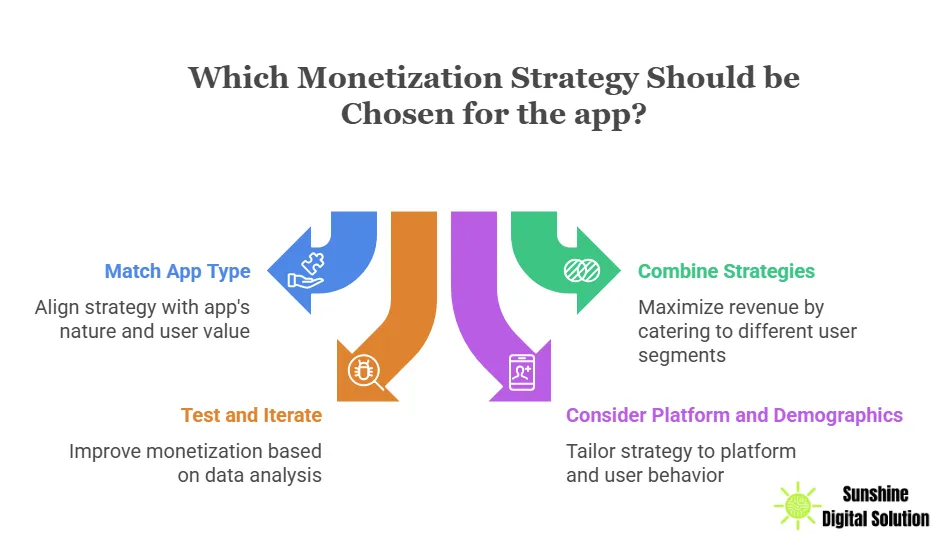 Choosing the right app monetization strategy for maximum revenue.
1. Match Your App Type with the Best-Fit Strategy
- Consider the nature of your app and what your users value most.
- For example, freemium models work well for productivity or gaming apps, while subscription models suit content-rich apps like streaming or learning platforms.
2. Combine Strategies for Optimal Revenue
- Hybrid approaches can maximize earnings by catering to different user segments.
- Examples include freemium plus ads or subscriptions combined with in-app purchases.
3. Test, Monitor, and Iterate
- Use analytics to track engagement, conversion, and revenue by strategy.
- Adjust your approach based on data to improve monetization without compromising user experience.
4. Consider Platform Differences and User Demographics
- iOS users may spend more on premium features, while Android users often respond better to ad-supported models.
- Understanding your audience’s behavior and preferences ensures you choose strategies that resonate and generate sustainable revenue.
Developing and monetizing a successful app can be complex, especially when you consider factors such as app development costs, platform performance, and user retention. Sunshine Digital Solutions provides complete mobile app development services that help businesses identify the right monetization strategy, integrate analytics, and optimize revenue across iOS and Android platforms.
Whether you are planning a new app or looking to enhance an existing one, partnering with experts ensures a smooth path to growth and profitability.
Frequently Asked Questions