App discovery involves both organic and paid. With millions of apps on the Play Store and App Store, getting noticed is tough, and staying installed is even harder. Many great apps fail not because of poor design, but because they lack a smart mobile app marketing strategy.
Here’s a reality check:
Only about 25% of users reopen a mobile app after Day 1, and by Day 30, retention drops sharply across categories.
According to Statista, News apps see the highest retention at around 10%, followed by shopping apps at 4%, and entertainment apps at about 3%. Social media apps, however, retain less than 2% of users after a month. This highlights how maintaining consistent engagement is one of the biggest challenges in mobile app marketing.
Without a proper plan for mobile app promotion, visibility, and retention, your app can disappear fast. This guide will walk you through step-by-step tactics that actually work, from app launch strategy and user acquisition to engagement and a long-term mobile app marketing plan. You’ll learn how to make your app stand out, attract the right users, and keep them coming back.
What is Mobile App Marketing?
Mobile app marketing is the process of attracting, engaging, and retaining users to grow an app’s audience and revenue. In simple terms, it’s everything you do to help your app get discovered, downloaded, and used consistently.
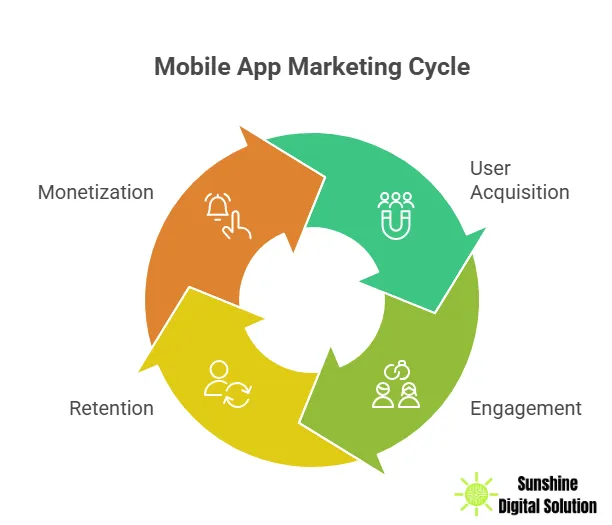 Here is an overview of the mobile app marketing cycle.
The app marketing process starts long before launch and continues throughout its life. It includes four key stages:
- User acquisition
- Engagement
- Retention
- Monetization.
Each stage plays a vital role in building a loyal user base and keeping your app profitable.
Unlike traditional product marketing, mobile app marketing relies heavily on in-app behavior and real-time data tracking. Every tap, session length, and feature used provides insights into how people interact with your app. These insights help marketers refine campaigns, personalize experiences, and make data-driven decisions that drive long-term success throughout the app marketing lifecycle.
Why Every App Needs a Marketing Strategy?
Millions of apps compete for attention across app stores, and relying solely on organic discovery rarely leads to success. Even the most brilliant ideas can go unnoticed without a clear app growth strategy.
With over 257 billion app downloads and more than 1,000 new apps released every day, competition in the mobile market is fierce. Despite this massive growth, most apps never reach a meaningful audience. Mobile users now spend an average of 5.01 hours daily on apps, but spend 78% more time on platforms than web users, showing how apps have become the main channel for engagement and retention. This shows how difficult it is for new apps to gain traction and retain users.
A well-defined mobile app marketing strategy isn’t just about promotion; it’s what helps your app stand out, build awareness, and stay installed on users’ devices long after launch.
A strong app marketing strategy ensures your app gets discovered, keeps users engaged, and builds long-term loyalty. Beyond visibility, marketing helps improve user retention and increase lifetime value (LTV), the total revenue a user brings over time.
The real importance of app marketing lies in consistency. It keeps your app relevant, strengthens brand trust, and turns one-time users into loyal advocates.
1. Increasing Competition in App Stores
The app store competition is fiercer than ever. As of 2024, with over 1.68 million apps on Google Play and nearly 1.54 million on the App Store, standing out has become a serious challenge. This oversaturation means that even well-designed apps can get buried without consistent, strategic marketing.
To stay visible, brands need to focus on app discoverability, optimizing store listings, earning reviews, running targeted ads, and maintaining a steady marketing presence. Consistency is what keeps your app in front of users’ eyes long after the initial launch buzz fades.
2. User Behavior and Short Attention Spans
Today’s users have shorter attention spans than ever, and they make quick judgments. Studies show that most people decide within the first minute whether they’ll keep using an app. This makes the onboarding and first-use experience crucial parts of any app engagement strategy.
Understanding mobile user behavior means focusing on smooth navigation, instant value, and personalized experiences from the very start. The better the first impression, the higher the chances of turning a new user into a long-term one.
3. The Role of Data and Personalization
Data is the backbone of effective app marketing. Through app analytics, developers and marketers can track user actions, preferences, and engagement patterns to see what truly works.
Using this data to create personalized app marketing campaigns helps deliver more relevant content, offers, and notifications, leading to higher retention and conversion rates. In short, personalization transforms generic marketing into meaningful interactions that drive loyalty and growth.
Understanding the Mobile App Marketing Funnel
The mobile app marketing funnel maps the complete app customer journey, from the moment users first discover your app to the point at which they become loyal advocates. Unlike the traditional marketing funnel, which focuses mainly on awareness and conversion, the app marketing funnel emphasizes user engagement and retention, which is one of the key factors that determine long-term success.
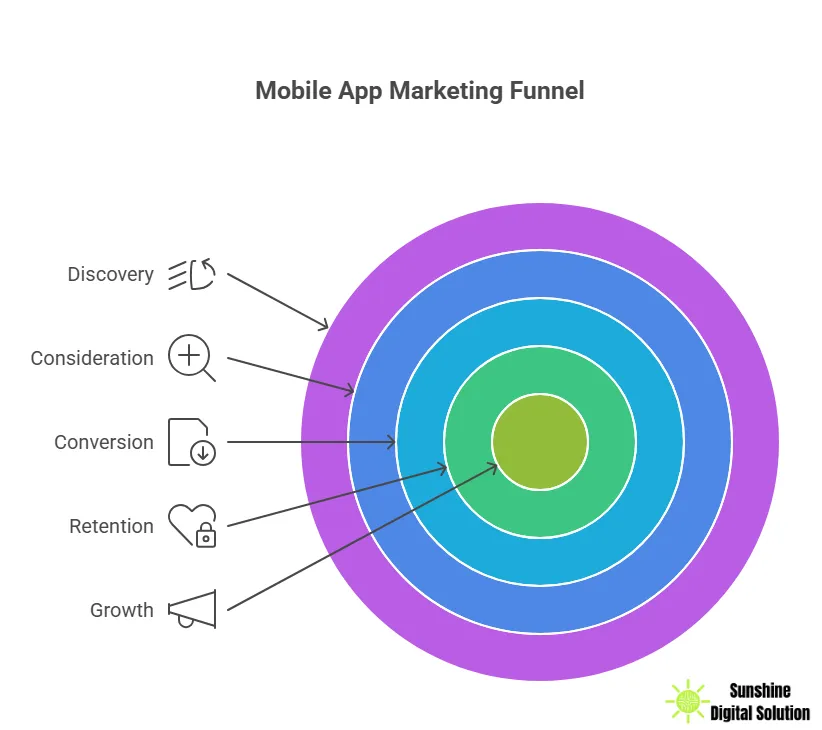 Here’s a visual representation of the mobile app marketing funnel.
The funnel typically includes five main stages:
1. Discovery:
This is where potential users first learn about your app through channels like app store optimization (ASO), paid ads, social media, or influencer campaigns. Metrics such as impressions, reach, and click-through rates (CTR) help measure visibility at this stage.
2. Consideration:
Once users are aware of your app, they start evaluating whether it’s worth downloading. Here, ratings, reviews, app previews, and landing page content play a vital role. Engagement metrics, such as the view-to-download ratio and store listing conversion rate, indicate performance.
3. Conversion:
This is when users take action, such as downloading and installing your app. Optimizing onboarding flow, app speed, and permissions can reduce drop-offs. Key metrics include install rate, cost per install (CPI), and onboarding completion rate.
4. Retention:
After installation, the focus shifts to keeping users active. Strategies like personalized push notifications, in-app messages, and loyalty programs encourage continued use. Retention is measured using metrics such as daily active users (DAU), churn rate, and session length.
5. Growth:
At this stage, satisfied users become promoters through referrals, reviews, and organic shares. Paid and organic growth strategies often merge here, driving both user acquisition and re-engagement. Metrics like lifetime value (LTV) and referral rate reflect long-term growth.
Understanding these five app marketing stages helps businesses choose the right marketing channels, allocate budgets wisely, and measure success at every phase of the user journey.
Stage 1. Discovery: Get Your App Found
The discovery stage is where everything begins. It’s the first time potential users encounter your app, whether through an ad, a social post, or an app store search. In such a crowded space, having a great product isn’t enough; you need strong visibility strategies to make your app stand out.
 This stat highlights mobile app revenue generated from in-app marketing.
App discovery involves both organic and paid methods. Organic tactics focus on reaching users naturally through search, content, and communities, while paid campaigns use targeted ads to drive faster installs. A balanced approach helps build consistent visibility and momentum.
1. App Store Optimization (ASO)
App Store Optimization (ASO) is one of the most effective ways to improve your app store ranking and boost downloads organically. By refining key elements like your app’s title, icon, description, reviews, and screenshots, you increase your chances of appearing in relevant searches.
Good ASO techniques include:
- Using relevant keywords naturally in the title and description
- Designing a clean, eye-catching app icon
- Uploading screenshots or videos that highlight features
- Encouraging positive reviews through a great user experience
Consistent ASO updates help your app stay visible as trends and algorithms change.
2. Search Engine Optimization (SEO) for Apps
In addition to app stores, your app should also be searchable on the web. SEO for apps involves optimizing your app’s website and related content so users can discover it through Google.
Create an app-focused website or blog that targets app-related keywords. Publish tutorials, user stories, and updates. Earning backlinks and press mentions strengthens your app website SEO, builds authority, and drives high-intent traffic that converts into installs.
If your business also offers
mobile app development services, showcasing case studies, app launch stories, or client testimonials on your website can boost both trust and discoverability.
3. Organic Promotion Strategies
Organic app marketing builds long-term visibility without relying on ads. Start by engaging in app community marketing on platforms like Quora, Reddit, and social media. Answer user questions, share valuable insights, and subtly introduce your app where it fits naturally.
Referral programs also work well, encouraging users to invite friends in exchange for rewards or premium access. This word-of-mouth promotion helps your app grow authentically and cost-effectively.
4. Paid Promotion Strategies
To increase growth, pair organic efforts with paid app marketing. Platforms like Google Ads, Meta (Facebook & Instagram), TikTok, and YouTube let you run highly targeted app-install ads.
💡
Pro Advice: Use App Install Ads to Boost Downloads
Run targeted install campaigns across platforms like Google, Pinterest, or Snapchat. Focus on reaching niche audiences with interests that align with your app to drive high-quality installs efficiently.
Focus on Cost Per Install (CPI) optimization by testing different creatives, audience segments, and bidding strategies. Monitor analytics closely, spend smarter, not more, by keeping campaigns aligned with user quality, not just quantity.
5. Influencer & Affiliate Marketing Expansion
Influencer collaborations and affiliate programs are powerful tools for organic app growth. Partner with influencers who genuinely connect with your audience and can showcase your app’s value through authentic content. Similarly, develop affiliate partnerships that reward performance, driving quality installs, subscriptions, or in-app purchases. These relationships bring both credibility and sustainable results.
Combine influencer partnerships with app content marketing, such as tutorials, reviews, or behind-the-scenes stories, to build credibility. This approach not only drives installs but also strengthens your brand image over time.
Stage 2. Consideration: Build Trust Before Download
Once users discover your app, the next step is convincing them to hit the download button. This is where trust and credibility matter most. At this stage, users are comparing your app to competitors, reading reviews, watching videos, and evaluating design and content before making a choice.
Look at apps like Spotify or Duolingo, their store pages aren’t just listings; they’re confidence builders. From professional visuals to detailed descriptions and thousands of positive reviews, everything on their page is designed to build app credibility and user trust.
1. Use Social Proof
Social proof is one of the most powerful ways to influence potential users. Highlight app testimonials, case studies, or success stories that show real results. Featuring ratings, awards, or endorsements can make your app appear more trustworthy and professional.
Even a short quote from a happy user or a mention of a feature by a reputable source can help others feel confident that your app delivers real value.
2. Manage Ratings and Reviews
A strong app feedback system helps maintain a healthy reputation. Apps with 4+ star ratings perform significantly better in app store rankings and conversions. Encourage happy users to leave reviews and respond quickly to any negative feedback. This shows that you care about improving user experience.
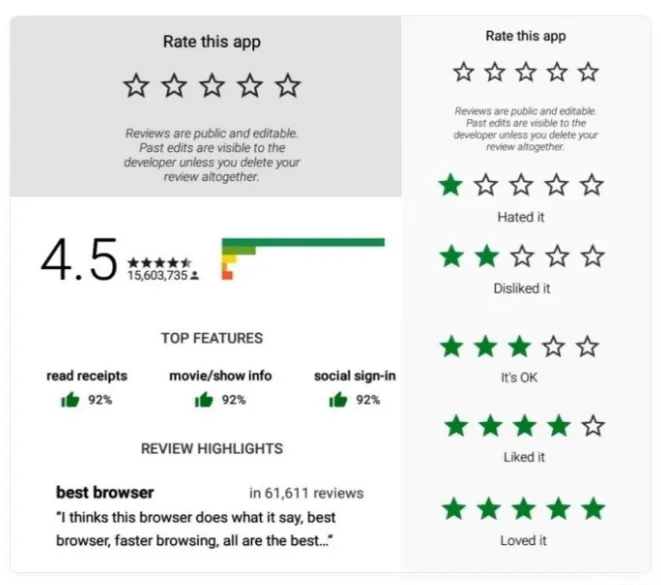
Manage reviews and ratings to improve mobile app marketing.
Regularly monitoring app ratings also helps identify bugs or pain points early, allowing you to make data-driven improvements before issues affect more users.
3. Optimize App Store Listing for Conversion
Your app store listing is your digital storefront, and first impressions count. Focus on app conversion optimization by using engaging visuals, clear feature highlights, and short, action-oriented copy.
Include preview videos that showcase your app in action and high-quality screenshots that capture key benefits. These visuals can significantly boost installs by showing users exactly what to expect. Following app listing best practices ensures every element from title to description encourages users to download.
4. Transparency and Privacy Messaging
Most users value honesty and security. Displaying a clear app privacy policy and highlighting compliance with standards like GDPR or CCPA helps users feel safe.
Reassure users about how their information is used and protected. Communicating app security practices openly builds long-term trust and reduces hesitation during the download decision.
Stage 3. Conversion: Turn Interest into Installs
Once you’ve built awareness and trust, it’s time to turn that interest into action. The conversion stage focuses on turning potential users into active users through downloads, signups, or in-app purchases. Every element of your app’s presentation, from visuals to messaging, plays a role in boosting your app conversion rate.
A seamless experience and clear value proposition can make all the difference. Small design tweaks, simplified signups, and emotionally appealing messages often lead to higher app installs and smoother user activation.
1. Streamline the User Journey
The easier it is for users to get started, the higher your conversions. Focus on improving app user experience by removing unnecessary steps in your app download flow. Avoid lengthy signup forms and offer options like Google or Apple login for instant access. Every second counts. The faster users can explore your app, the less likely they are to drop off before completing the install or registration.
2. Use Emotional Triggers in Ads and CTAs
Great marketing speaks to emotions, not just logic. In your ad campaigns, use storytelling and visuals that connect with users’ desires or pain points. Strong app ad creatives should highlight how your app improves lives, saving time, reducing stress, or offering entertainment.
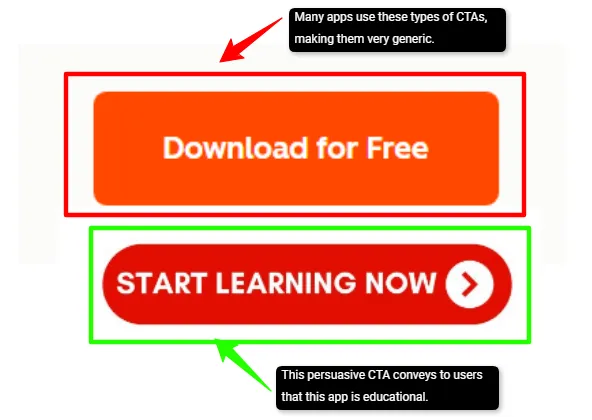
Using effective CTAs to boost mobile app marketing results.
When writing app CTA examples, replace generic phrases like “Download for free” with emotion-driven prompts such as “Start Learning Today” or “Find Your Next Adventure.” These subtle changes make calls to action more persuasive.
3. Landing Pages that Convert
A high-performing landing page can make or break conversions. Focus your app landing page optimization on one main goal: getting the visitor to click your mobile CTA. Keep the design clean, highlight key benefits, and use short, benefit-led headlines that instantly communicate value.
Add real visuals, testimonials, and trust signals to nudge visitors toward action. The clearer and more focused your message, the stronger your conversion results.
4. Onboarding Experience Optimization
Your onboarding process is where users decide if they’ll stay or leave. A smooth app onboarding experience introduces your app’s value quickly and makes first-time use effortless.
Interactive tutorials, progress indicators, or quick guided tours can dramatically increase user retention during onboarding. Show users how to achieve quick wins early because the faster they see value, the more likely they are to become loyal users.
Stage 4. Retention: Keep Users Engaged
Getting users to download your app is just the beginning, but keeping them engaged is where real growth happens. A strong app retention strategy ensures that users don’t just try your app once and leave. In fact, studies show that acquiring a new user can cost up to 5 to 25 times more compared to retaining an existing one, making retention one of the most cost-effective ways to grow.
Personalization and consistent updates are key. When users feel that an app understands their needs and evolves with their feedback, they’re far more likely to stay active and loyal. The goal is simple: keep users coming back, not just for what your app does, but for how it makes them feel.
1. Push Notifications and In-App Messaging

Using push notifications to engage mobile app users effectively.
Effective communication keeps your app top of mind. Well-timed personalized push notifications and in-app communication can re-engage users without feeling intrusive.
Segment your audience based on behavior, such as sending a reminder to complete a task or alerting them to a new feature they’ll actually care about. The key is relevance. Generic notifications can cause users to mute or uninstall, but timely, thoughtful messages build engagement and trust.
2. Gamification and Loyalty Programs
People love progress. Adding app gamification elements such as streaks, points, and achievement badges turns everyday actions into fun, rewarding experiences.
Combine this with app loyalty rewards, such as discounts, unlockable features, or early access to new updates, to give users tangible reasons to stay active. Gamification doesn’t just entertain; it strengthens emotional connection and boosts long-term retention.
3. Retargeting and Re-Engagement Campaigns
No matter how great your app is, some users will go inactive. That’s where app retargeting comes in. Use personalized reactivation campaigns through email or ads to remind users what they’re missing.
Highlight new features, showcase community milestones, or offer limited-time rewards to bring them back. Small re-engagement pushes can often reignite interest and turn dormant users back into active users.
4. Regular Updates and Feature Improvements
Apps that grow with their users stay relevant longer. Consistent app updates not only fix bugs but also signal that your app is alive and improving. Use analytics and feedback to guide your app version optimization, introduce requested features, refine the design, and enhance performance.
Frequent improvements show users that you value their experience, encouraging them to stay loyal and spread positive word of mouth.
Stage 5. Growth: Scale What Works
Scaling your mobile app is more than increasing downloads; it’s about optimizing what’s working and expanding strategically. Once you’ve established a loyal user base, the focus shifts to maximizing performance, improving user lifetime value, and exploring global opportunities. Growth at this stage is powered by smart automation, creative innovation, and consistent optimization.
1. AI-Powered Optimization
Artificial intelligence is reshaping mobile app marketing by enabling data-driven decision-making. AI tools can automate ad bidding, test creative variations, and predict user behavior. This helps identify which campaigns bring the best results and allows marketers to allocate budgets efficiently. By using AI for performance insights, you can personalize campaigns and scale them faster without losing quality.
2. Diversify Advertising Channels
To achieve long-term growth, your marketing strategy must go beyond Google and Meta. Exploring new advertising platforms like Connected TV (CTV), in-game ads, and other app ad networks can help reach audiences in fresh ways. Cross-channel marketing creates multiple touchpoints for potential users, increasing your app’s visibility and helping you discover untapped markets.
💡
Success Formula: Diversify Your Ad Partners for Better ROI
Brands that use multiple ad networks often achieve higher ROI and stronger retention. Expanding beyond a few platforms helps lower acquisition costs and reach broader audiences effectively.
3. Experiment with Creative Formats
User attention spans are short, so experimenting with different ad formats is key. Try short videos, playable ads, or interactive AR experiences that let users engage with your app before downloading it. Creative diversity keeps your marketing fresh and encourages higher engagement rates.
4. Global and Local App Localization and Expansion
Expanding your app globally starts with smart localization. Adapt your app’s language, visuals, pricing, and offers to match regional habits and expectations. Consider cultural nuances, payment options, and seasonal trends to make your app feel relevant in every region. A well-localized app earns trust faster and connects with users on a personal level, and unlocks sustainable growth across regions.
💡
Marketing Hacks: Use Out-of-Home (OOH) Ads for Local Reach
Use billboards, metro ads, or digital kiosks to build visibility in key cities. Pair OOH ads with local PR or digital retargeting for stronger awareness during regional app launches.
In short, using AI optimization, expanding into new channels, building strong influencer partnerships, testing creative formats, and localizing globally, you create a strategy that turns steady growth into long-term success.
Why does a Pre-Launch Mobile App Marketing Strategy matter?
A successful app launch doesn’t start on release day; it begins long before that. Pre-launch app marketing is about building excitement, awareness, and trust before your app even hits the store. The goal is simple: create anticipation and gather an audience ready to download the moment you go live.
Start with a clear app launch checklist that includes identifying your target audience, defining your app’s unique value, and setting measurable goals. Build a landing page or signup form to collect early interest and email subscribers who can become your first users.
The following are some easy steps for a pre-launch mobile app marketing strategy:
1. Market and Competitor Research
Before launching your app, understanding your market and the app development cost structure helps you plan budgets effectively and invest in the right marketing channels from day one. App market research helps you identify what users want, what they’re missing, and how you can offer something better. Tools like Sensor Tower and App Annie give valuable insights into trending keywords, audience behavior, and competitor performance.
A good competitor analysis for apps also examines user reviews to uncover pain points, such as poor usability or missing features. Study your competitors’ app store optimization (ASO) strategies, including their keywords, screenshots, and descriptions. This helps you position your app more effectively and target the right users from the start.
2. Build a Strong Brand Identity
Your app’s brand isn’t just about a name; it’s the personality users connect with. Strong app branding includes a recognizable app logo, consistent visuals, and a clear message about what makes your app stand out.
Define your app positioning by answering one question: Why should users choose you over others? Keep your tone, colors, and design aligned across every channel. A memorable, cohesive identity builds trust, especially when users first encounter your app.
💡
Expert Tip: Build a Ready-to-Share Press Kit
Keep a professional press kit ready with your logo, app screenshots, short bios, and media links. It helps journalists or bloggers feature your app quickly and keeps your brand image consistent.
3. Create a Landing Page and Email List
A dedicated app landing page is one of the most effective ways to attract early interest. It gives potential users a glimpse of your app’s features, benefits, and launch date all in one place. Add a simple signup form to build your email list, which you can later use for app email marketing campaigns and launch updates.
This not only builds awareness but also gives you a ready audience eager to download your app once it’s live.
4. Social Media Teasers and Influencer Partnerships
Creating buzz before launch can make a huge difference. Run app teaser campaigns on social media by sharing short clips, countdowns, or sneak peeks of app features. These keep your audience curious and engaged.
Collaborating with influencers is another powerful way to boost reach. Through influencer app marketing, you can connect with your target audience authentically, as people are more likely to trust recommendations from creators they follow.
5. Beta Testing and User Feedback
Before your official launch, invest time in beta testing your app. It allows real users to explore your app in its early stage and share honest feedback. This helps you identify bugs, improve user flow, and enhance the overall experience.
Collecting app user feedback early builds credibility and ensures a smoother launch. When users feel their input matters, they’re more likely to support and promote your app once it’s officially released.
By the time your app goes live, you shouldn’t be introducing it; you should already have people waiting for it. That’s the power of starting your marketing early.
What are the Key Metrics to Measure App Marketing Success?
A successful mobile app marketing strategy relies on continuous tracking and optimization. Data isn’t just numbers; it’s insight into what’s working and where to improve. By monitoring the right app marketing KPIs, you can identify performance gaps, refine campaigns, and drive consistent growth. Every stage of your app’s journey from awareness to retention can be measured through actionable app analytics metrics that reveal user behavior, acquisition efficiency, and profitability.
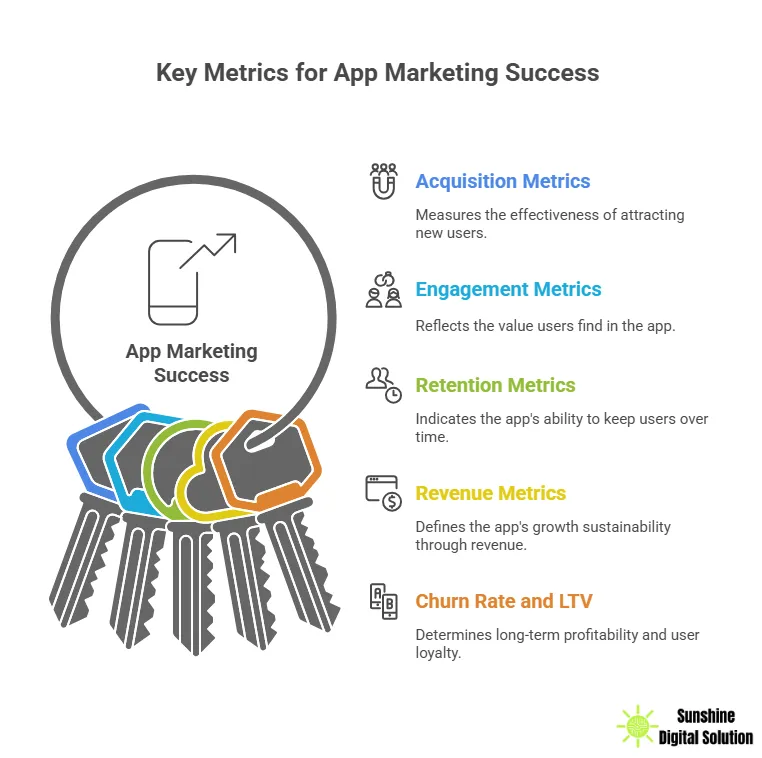
Key metrics to track for mobile app marketing success.
1. Acquisition Metrics
These metrics show how effectively you’re attracting new users.
- Installs measure how many users download your app, a direct indicator of marketing reach.
- Cost Per Install (CPI) tells you how much you’re spending for each user acquisition.
- Click-Through-Rate (CTR) helps assess how appealing your ads or listings are. A higher CTR means your creatives and messaging resonate with your target audience.
2. Engagement Metrics
After acquisition, engagement reflects how much value users find in your app.
- Session Length shows how long users stay active during a single visit. Longer sessions often indicate better engagement.
- Daily Active Users (DAU) / Monthly Active Users (MAU) indicate how often users return, helping you measure stickiness.
- Active Usage Frequency highlights how consistently users interact with key features.
3. Retention Metrics
Retention is one of the strongest indicators of app success.
- Day 1, Day 7, and Day 30 Retention Rates track how many users return after installation.
- A high retention rate means your app continues to deliver value and satisfaction over time.
4. Revenue Metrics
For monetized apps, revenue data defines growth sustainability.
- Average Revenue Per User (ARPU) measures the revenue generated by each user.
- Return on Ad Spend (ROAS) measures the profitability of your marketing investments, such as how much revenue you earn for every dollar spent on ads.
5. Churn Rate and Lifetime Value (LTV)
Two key metrics that determine long-term profitability.
- Churn Rate shows how many users stop using your app within a given period. A lower churn means better retention and satisfaction.
- Lifetime Value (LTV) estimates the total revenue a user contributes during their time with your app. High LTV signals strong loyalty and healthy monetization strategies.
App marketing success depends on tracking, analyzing, and regularly optimizing these metrics. The balance between acquisition cost, engagement depth, and long-term value defines how sustainable your app’s growth truly is.
What are the Common Mistakes in Mobile App Marketing?
Even with a strong strategy, many apps fail to gain traction due to a few common but avoidable app marketing mistakes. From poor ASO practices to ignoring user feedback, these missteps can limit visibility, lower downloads, and hurt long-term retention.
Here’s a look at frequent pitfalls and quick fixes to keep your app on the right track.
1. Ignoring App Store Optimization (ASO)
Many marketers launch apps without optimizing titles, descriptions, or visuals. This reduces visibility and discoverability in app stores.
💡
Fix: Use relevant keywords in the title and description, design a clear app icon, and keep screenshots up to date with the latest features.
2. Neglecting Ratings and Reviews
Poor or unaddressed reviews can turn away new users. Many developers forget that users trust ratings as much as personal recommendations.
💡
Fix: Encourage happy users to leave reviews and reply promptly to negative feedback to show you value user input.
3. Skipping Data Analysis
Relying on intuition instead of data is a major app launch error. Without analytics, you can’t identify which channels or features work best.
💡
Fix: Use tools like Firebase, Appsflyer, or Mixpanel to track installs, retention, and engagement trends. Adjust campaigns based on real performance data.
4. Poor User Onboarding
If users find the app confusing at first use, they’re likely to uninstall it immediately.
💡
Fix: Create a short, guided onboarding process that highlights core benefits and helps users get started smoothly.
5. Lack of Consistent Marketing
Some brands focus heavily on launch campaigns but disappear after release. This breaks engagement and slows growth.
💡
Fix: Keep a steady flow of social media content, in-app events, and email campaigns to maintain visibility and excitement.
6. Weak App Branding
An unclear or inconsistent brand identity makes it hard for users to remember your app.
💡
Fix: Define a strong visual identity, tone, and message that align with your target audience and remain consistent across all channels.
7. Ignoring User Feedback
Failing to listen to user suggestions or complaints can lead to negative experiences and churn.
💡
Fix: Collect in-app feedback regularly and release updates that address user concerns.
By avoiding these pitfalls and applying these quick fixes, you can strengthen your marketing strategy, improve downloads, and build lasting user trust.
What are the Best Tools for Mobile App Marketing?
Choosing the right tools can make or break your mobile app marketing strategy. From analyzing performance to automating campaigns, each tool helps streamline your workflow and improve results. Here are some of the best app marketing tools grouped by category to help you grow smarter.
1. App Store Optimization (ASO) Tools
ASO tools help boost your app’s visibility and ranking in app stores by optimizing keywords, visuals, and metadata.
- Sensor Tower: Great for keyword tracking, competitor insights, and market trends.
- AppTweak: Offers AI-driven recommendations to improve app visibility and conversion rates.
- MobileAction: Provides ASO performance tracking and competitor comparisons.
Benefit: These tools make it easier to understand what drives downloads and how to stay ahead of competitors in search rankings.
2. App Analytics Tools
Tracking metrics is vital for data-driven growth. These app analytics tools reveal how users find, engage with, and retain your app.
- Firebase Analytics: A free tool by Google that tracks installs, engagement, and in-app behavior.
- Mixpanel: Focuses on user retention, event tracking, and conversion funnels.
- Appsflyer: Best for attribution tracking and understanding which campaigns drive installs.
Benefit: You gain clarity on what’s working, where users drop off, and how to improve app performance.
3. Automation and Engagement Tools
These tools save time by automating marketing tasks like user segmentation, messaging, and re-engagement campaigns.
- CleverTap: Helps send personalized push notifications and in-app messages.
- OneSignal: A reliable tool for automating communication with targeted user groups.
- Airship: Allows you to deliver multi-channel campaigns using data-driven automation.
Benefit: Automation keeps your users engaged without requiring constant manual input.
4. Creative and Ad Tools
Great visuals and copy drive conversions. These tools help design, test, and manage ad creatives efficiently.
- Canva: Ideal for quick and professional-looking app visuals, icons, and ad designs.
- AdCreative.ai: Uses AI to generate high-performing ad creatives automatically.
- Playbook: Offers templates and inspiration for app ads and social media content.
Benefit: Creative optimization helps your ads stand out and attract quality users faster.
Using the right combination of ASO, analytics, automation, and creative tools simplifies your workflow, increases efficiency, and drives faster mobile app growth.
How to Build a Long-Term Mobile App Marketing Plan?
The best mobile app marketing strategies focus on sustainable growth, not just downloads. Here’s how to create one that evolves with your users and keeps your app ahead of the curve:
- Use data to guide decisions: Track user behavior, campaign performance, and retention trends. Let real data shape your future strategies.
- Test continuously: Run A/B tests for creatives, CTAs, and messaging. Small tweaks often lead to big improvements in conversion and engagement.
- Build a brand community: Engage users beyond the app through social media, email updates, and events. A loyal community boosts retention and referrals.
- Prioritize user feedback: Listen to what your audience says and update your app accordingly to build trust and credibility.
- Keep marketing consistent: Don’t stop after launch. Regular campaigns, new features, and seasonal promotions maintain momentum.
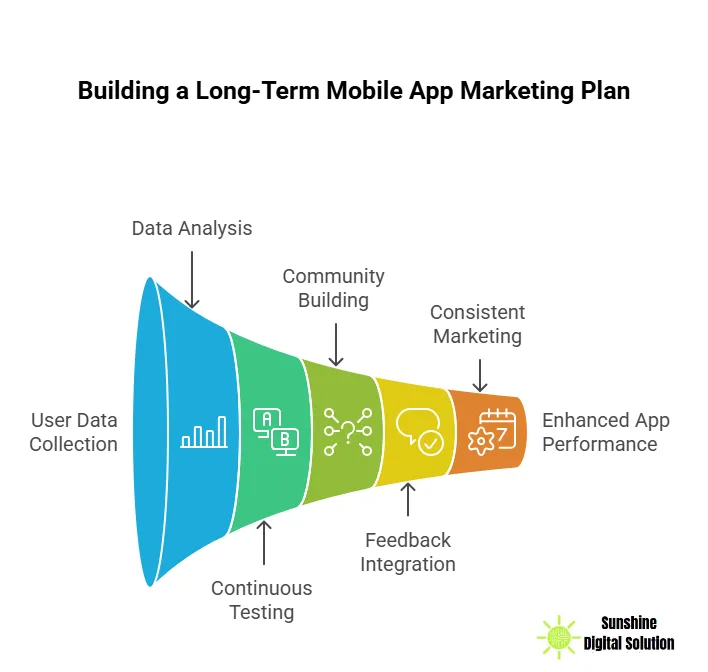
Building a long-term mobile app marketing plan is important for steady growth.
If you want expert help crafting a growth-focused, data-driven best mobile app marketing strategy, Sunshine Solution Agency is the partner you need. Our team specializes in building custom app growth roadmaps that combine analytics, creativity, and automation to help your app grow, engage, and succeed long-term.