If someone in your city searches “emergency plumber near me”, would your business show up first or your competitor’s? That single search can decide who gets the job.
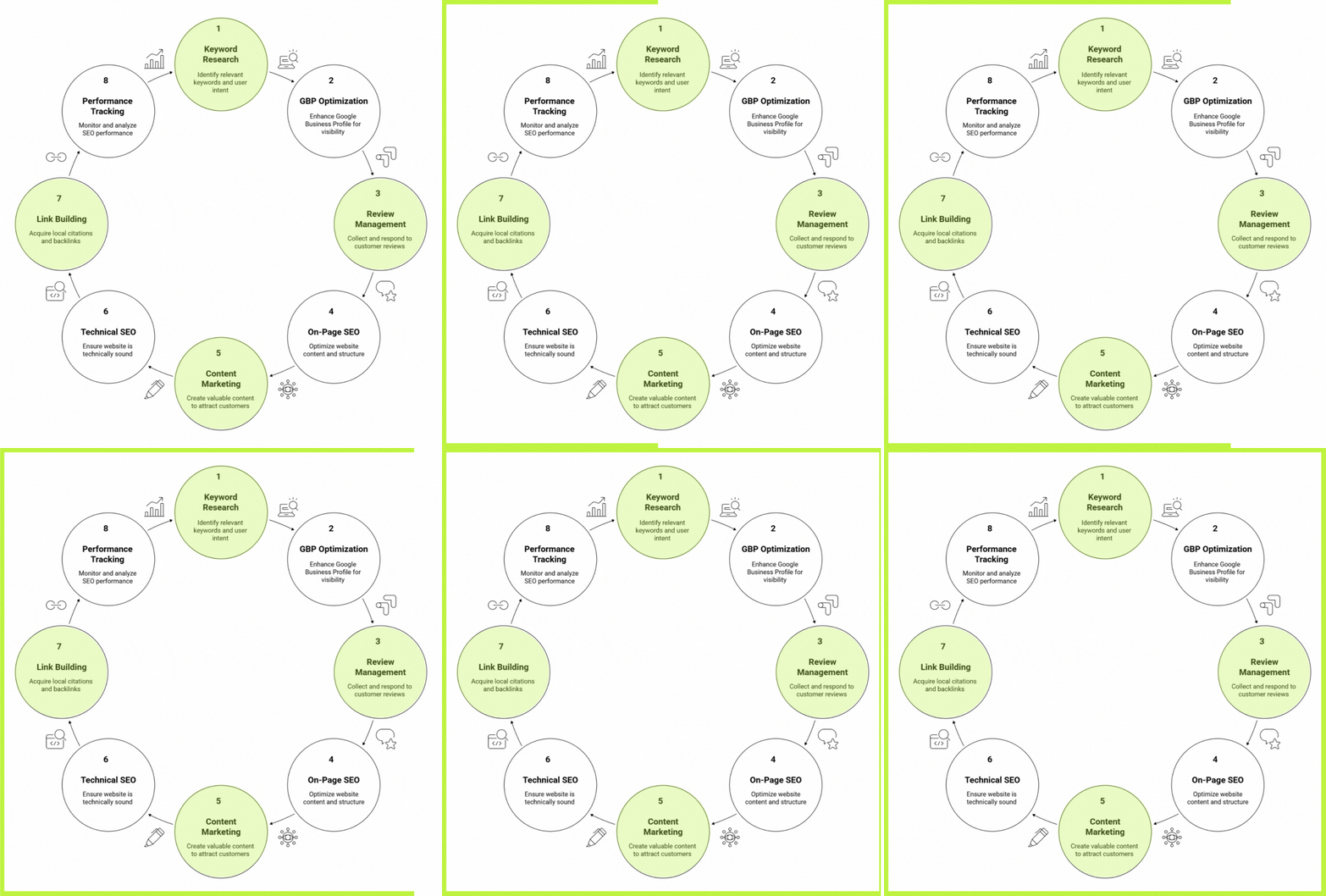
That’s the power of local SEO for plumbers, helping your plumbing business appear right when customers are ready to call or book a service. In this guide, Sunshine Digital Solutions has broken down everything you need to know into 8 practical chapters, each explaining a key part of building your plumbing brand online.
From discovering the right keywords to create content that ranks locally and gets picked up by AI platforms like ChatGPT and Perplexity, every step is backed by real local search insights.
How Local SEO for Plumbers Really Works in 2026?
Local SEO for plumbers is the process of helping your plumbing business get discovered by nearby customers when they search online, whether that’s on Google, Google Maps, or even through AI tools like ChatGPT and Perplexity. It ensures that when someone in your area searches “emergency plumber near me” or “water heater repair in Mountlake”, your business is the one they find first.
We’ll walk you through 8 detailed chapters to show exactly how local SEO for plumbers works. You’ll learn how to target the right local keywords, build location-based pages, earn reviews, optimize your GBP, and even make your business visible on AI-powered search tools so homeowners always find you first when they need a plumber.
Chapter 1: Keyword & Intent Research for Plumbers
When it comes to Local SEO for plumbers, everything starts with understanding what people in your area are searching for. Keyword research isn’t just about finding words; it’s about finding the right type of searches that match what potential customers want.
If you target the wrong intent, even the best SEO won’t bring in real customers. So, before creating any page or ad, you need to know why someone is searching, not just what they’re searching for.
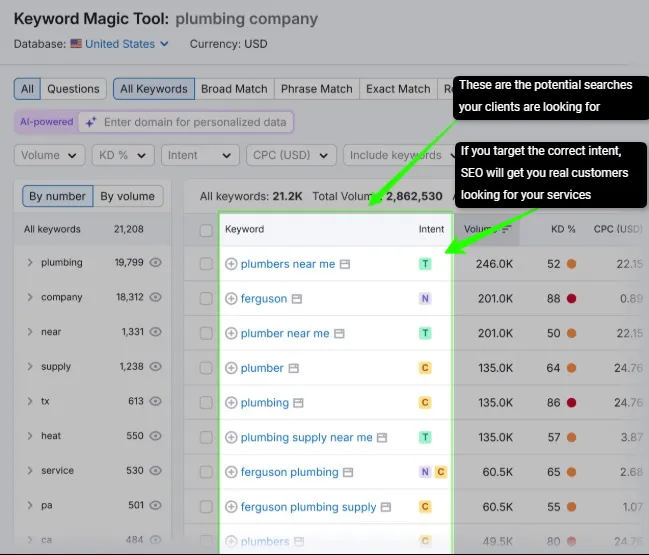 Search intent and keyword types tailored for plumbers.
1.1: Identify Real Local Intent
Let’s move beyond generic searches like “plumber near me.” People search with different goals in mind, and each goal (or intent) tells you what kind of page or content you should create.
Here’s how search intent works for plumbers:
| Intent Type | What It Means | Example Search | Best Page Type to Create |
|---|
| Transactional | The user wants to hire a plumber or book a service right now. | Book drain unclogging in Mountlake | Service page or booking page |
| Informational | The user wants to learn more before hiring anyone. | Why is my water pressure low? | Blog post, FAQ, or educational guide |
| Navigational | The user is looking for a specific company or local recommendation. | Best plumber in Mountlake reviews | Google Business Profile, testimonial page, or comparison blog |
| Conversational | The user is asking naturally through AI tools or voice assistants (used by LLMs like ChatGPT). | Who is the most reliable plumber in Mountlake? | Conversational FAQ page or LLM-optimized content block |
📌
GPT Prompt to Generate Informational Questions!
You are an experienced SEO researcher and content strategist. The target business is a plumbing company serving in [location] and nearby neighborhoods. I need a focused set of informational search questions that local homeowners would ask (not transactional requests).
Please produce a list of 50 unique, local-focused informational questions (question format: who/what/why/how/can/is/when), prioritized for real homeowner intent.
1.2: Use Entity & Semantic Keyword Expansion
When you create content for your plumbing business, you shouldn’t just focus on one keyword like “plumber in Mountlake.” Google and AI tools (like ChatGPT, Gemini, and Perplexity) now look at the overall meaning and context of your page, not just repeated words. That’s where semantic keywords and entities come in.
- Semantic keywords are words and phrases related in meaning to your main topic.
For example, if your keyword is “pipe leak repair,” semantic terms could be water pressure, corrosion, burst pipe, plumbing inspection, etc. - Entities are the real-world things that search engines recognize, like “plumber,” “Mountlake,” “water heater,” “leak detection,” or your business name. Google connects these entities to understand context and trust.
1.2.2: How to Find Semantic Keywords and Entities?
Here are a few free and AI-powered tools you can use:
- Google SGE (Search Generative Experience): See how Google’s AI summarizes answers for “plumbing issues.” It shows common entities and related terms.
- People Also Ask and AlsoAsked.com: Discover the real questions homeowners are asking.
- ChatGPT or Perplexity: Ask these tools to list related terms, causes, and subtopics for a keyword like “leak repair.”
You can literally ask:
“What are the related terms and causes connected to pipe leak repair for local SEO content?”
These tools give you semantically related ideas you can use in your blog posts and service pages.
1.2.3: Build “Topical Clusters”
A topical cluster is a group of pages or blog posts that all focus on one main topic. Think of it like this:
- One main service page is the center (e.g., “Drain Cleaning in Mountlake”).
- Then you create supporting pages or blogs that talk about related issues:
- “How to prevent drain blockages at home”
- “Top causes of slow drainage”
- “Why DIY drain cleaning can make things worse”
All those pages link back to your main drain cleaning page, showing Google that you’re an expert in that topic. This structure helps your site rank better for multiple related searches and signals authority to AI tools like ChatGPT.
| Main Keyword | Related Entities | Semantic Keywords | Topical Cluster Idea |
|---|
| Pipe leak repair | Water pressure, corrosion, plumbing inspection, burst pipe | Leak detection, pipe replacement, plumbing maintenance, and early signs of leaks | Main service page: “Pipe Leak Repair in Mountlake” + blogs: “How to spot hidden leaks”, “Why pipes corrode”, “DIY vs professional leak repair” |
| Drain cleaning | Drain blockage, kitchen sink, sewer line, hydro-jetting | Clogged drain, slow drainage, bad odor, pipe buildup | Main service page: “Drain Cleaning in Mountlake” + blogs: “Top causes of slow drains”, “When to call a pro for clogs”, “Hydro-jetting vs snaking” |
| Water heater repair | Tankless water heater, pilot light, thermostat, sediment buildup | No hot water, heater leaking, low temperature, and low energy efficiency | Main service page: “Water Heater Repair in Mountlake” + blogs: “Why your water heater leaks”, “When to replace your heater”, “Tankless vs tank heaters” |
1.3: Optimize for LLM Discovery
Most plumbers today focus only on ranking in Google Search, but there’s a big shift happening; people are now searching using AI tools like ChatGPT, Google Gemini, and Perplexity.
These tools don’t just show blue links; they summarize answers from trusted online sources. That means if you want your plumbing business to appear in those AI summaries, you must optimize for LLM (Large Language Model) Discovery. LLMs work differently from traditional search engines. Instead of only reading keywords, they:
- Analyze high-quality content with clear structure and context.
- Look for trust signals like accurate business info (Name, Address, Phone, NAP).
- Prefer conversational answers that sound like human dialogue.
So, when someone types or asks,
“Who is the most reliable plumber in Mountlake?”
or
“Which plumber fixes water heaters quickly near me?”
The LLM scans online content to find brands it can confidently quote or reference. If your plumbing website has clear, conversational answers, it becomes eligible to be cited by those tools.
1.1.3: How to Optimize Your Plumbing Business for LLMs?
Here’s how you can optimize your plumbing business for LLM:
1. Use FAQ-Style Content
Add a section like: “People Also Ask About Our Plumbing Services.” Then include questions such as:
- “How fast can a plumber arrive in Mountlake?”
- “Do plumbers fix leaking pipes or just replace them?”
- “What’s the average cost of drain cleaning?”
Answer each one briefly and conversationally so LLMs can easily extract your responses.
2. Use Context-Rich Service Pages
Don’t just say “We offer plumbing services.” Instead, describe who you help, where, and how. For example:
“At WeServe Plumbing in Mountlake, we repair burst pipes, unclog drains, and install water heaters across the greater Washington area.”
This type of context-rich content helps LLMs understand your service area, expertise, and relevance.
3. Add Structured FAQ Schema
Implement FAQ Schema (JSON-LD) so that Google and LLMs can directly read your questions and answers. This helps your plumbing business appear in AI-generated snippets and even in Google’s AI Overview section, giving you visibility where your competitors may not yet appear.
Local plumbers rely heavily on neighborhood visibility. Learning why SEO is important for small businesses helps you see how ranking higher for “plumber near me” builds steady leads without constant ad spend.
Chapter 2: Google Business Profile Optimization (GBP)
If you want your plumbing business to appear on Google Maps and in the Local Pack (the top three listings that show with a map when people search “plumber near me”), then your Google Business Profile (GBP) is your most important digital asset.
 Key stats highlighting the benefits of Google Business Profile for plumbers.
It’s what helps Google confirm that your business is legitimate, active, and relevant to local searchers. So before diving into content or link building, your first step should always be optimizing and verifying your GBP. Think of your GBP like your online storefront; every detail matters for visibility and trust.
Here’s what you should focus on:
| Element | What to Do | Why It Matters |
|---|
| Business Name | Use your real-world business name exactly as it appears on signage, website, and invoices. Avoid keyword stuffing. | Builds trust and avoids Google penalties. |
| Category & Services | Choose the main category (e.g., Plumber) and add specific services like Drain Cleaning, Leak Repair, and Water Heater Installation. | Helps Google match you to relevant searches. |
| Business Description | Write a short, natural summary of your plumbing services, service areas, and emergency availability. Include local mentions like Mountlake or Washington. | Improves visibility in local and AI-powered search results. |
| Service Areas | Add neighborhood-level precision, not just “Washington.” Include Mountlake and the surrounding areas you actually serve. | Helps your business appear when users search from those locations. |
| Photos & Videos | Upload real photos of your team, vans, tools, and before/after shots of plumbing jobs. | Builds credibility and drives clicks, people trust visuals. |
| Working Hours | Keep your schedule accurate, especially if you offer 24/7 or emergency services. | Incorrect hours frustrate users and hurt your ranking. |
| Emergency Availability | Add “Emergency plumber” as a service and mention 24-hour availability if offered. | Boosts your chance of showing for “emergency plumber near me” searches. |
💬 Pro Tip from Sunshine Digital Solutions
Your Google Business Profile (GBP) is not just for Google; it’s for AI systems, too. When users ask “Who’s open now for plumbing in Mountlake?” on tools like ChatGPT or Perplexity, these systems rely on accurate business data pulled from Google.
Keeping your profile complete and consistent ensures your plumbing business is referenced across all search and AI platforms, not just in Google Search.
2.1: Use Keywords & Entities in Description
When writing your Google Business Profile (GBP) description, avoid keyword stuffing (e.g., repeating “best plumber in Washington” over and over). Instead, build context using entity words and phrases that help Google and AI systems understand what you do, who you help, and where you serve.
✅ Example (Good GBP Description):
“Sunshine Plumbing Experts provide 24/7 emergency drain cleaning, pipe repair, and water heater installation across Mountlake and Greater Seattle, helping homeowners fix leaks fast.” This tells Google:
- What you offer: plumbing, drain cleaning, pipe repair
- Where you operate: Mountlake & Greater Seattle
- Who you serve: homeowners
- Why it matters: solves urgent issues quickly
That’s how you make your profile semantically rich. AI and Google both understand your expertise better.
2.2 Post Regularly & Add Q&A
Keeping your Google Business Profile active helps both Google Search and AI-powered systems (like ChatGPT or Google SGE) see that your business is relevant and trustworthy. Here’s how to do it:
- Post Regularly: Share updates like “$50 Off Drain Cleaning This Month” or before-and-after photos of real jobs.
- Add Q&A Section: Use real questions from customers or generate ideas using ChatGPT with a prompt like.
- Upload Short Videos: Add quick clips (10–20 seconds) showing your team fixing a pipe or unclogging a drain.
Chapter 3: Reviews & Reputation Signals
Online reviews aren’t just for social proof; they’re powerful ranking signals that influence both Google’s local pack visibility and AI system trust (like ChatGPT, Perplexity, and Google SGE). When search engines and language models detect consistent, genuine reviews across multiple platforms, they treat your business as credible, active, and locally relevant.
3.1: Collect Reviews Proactively
Don’t wait for reviews to come in; ask for them! After completing a job, politely request your customers to leave a review that mentions:
- The specific service you provided (e.g., water heater installation)
- The location you served (e.g., in Mountlake Terrace)
- Their experience (e.g., “arrived on time and fixed it fast”)
This creates geo-relevance and service-based authority in your reviews, which helps you rank for searches like “emergency plumber near Mountlake.”
3.2: Respond to Reviews Professionally
How you reply to reviews matters just as much as getting them. Both Google and AI systems (like ChatGPT and Bard) analyze tone, empathy, and consistency in your responses.
- Always respond politely, even to negative feedback.
- Show appreciation and offer a quick resolution.
- Mention your service area naturally to add local context.
Example Response:
“Thank you, Sarah! We’re glad we could repair your burst pipe quickly. Always happy to serve our Mountlake and Lynnwood homeowners!”
That single response reinforces:
- Location relevance
- Service expertise
- Customer-first tone (important for LLMs interpreting brand sentiment)
3.3: Sync Reviews Across the Web
Reviews spread your entity’s reputation. Make sure your business has reviews on multiple trusted sites, not just Google. Consistency across platforms tells both users and AI that your business is legit and well-established.
Platforms to prioritize:
- Google Business Profile
- Yelp
- Facebook
- Nextdoor
- Angi (Angie’s List)
- Trustpilot
📌
Pro Tip
Not all agencies understand local trade services. When
choosing an SEO agency for your plumbing business, look for one experienced in local search. They’ll know how to rank your business in Google Maps and optimize your Google Business Profile for service calls.
Chapter 4: On-Page SEO for Local Plumbing Websites
Local SEO for a plumbing business doesn’t stop at GBP; your website is the foundation that reinforces every local signal. Optimizing your service and location pages helps both Google and LLMs (AI tools like ChatGPT, Perplexity, and SGE) understand what you do, where you operate, and how to rank you for nearby searches.
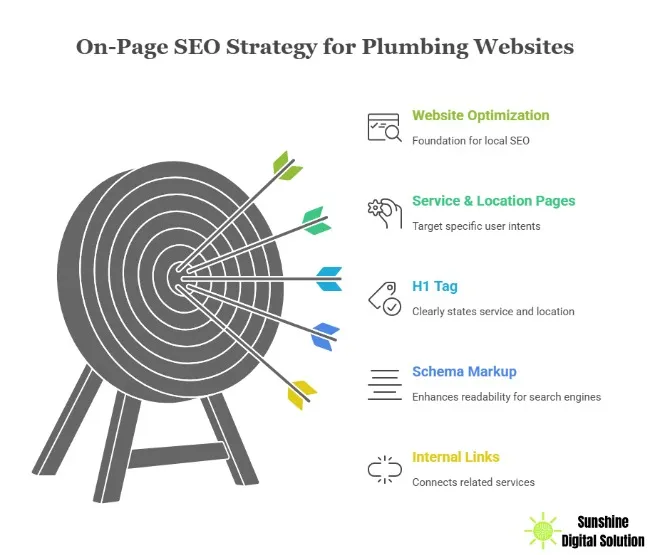 Effective on-page SEO strategies for plumbing websites to improve search visibility.
4.1: Optimize Service & Location Pages
Each service you offer and every location you serve should have its own optimized page. This helps Google match user intent (like “drain cleaning near Mountlake”) to the most relevant page on your site.
| Type | Example URL | Target Keyword |
|---|
| Service Page | /plumbing-services-in-mountlake/ | Plumbing services in Mountlake |
| Location Page | /drain-cleaning-in-seattle/ | Drain cleaning in Seattle |
Use this structure to make your website more organized and search intent–friendly.
Include These Elements on Each Page
- H1 Tag: Include service + location (e.g.,
<h1>Professional Drain Cleaning in Mountlake, WA</h1>) - Schema Markup: Use
LocalBusiness, Service, and FAQ - Internal Links: Connect related services (e.g., “Need pipe repair? Visit our pipe repair page.”)
- Meta Description: “24/7 plumbing services in Mountlake, WA. Fast, reliable drain cleaning & leak repair near you.”
💡 Pro Tip from Sunshine Digital Solutions!
Each page should feel local and human. Use photos, testimonials, and even short FAQs about your service area.
When someone searches “plumber near Mountlake,” your dedicated page will have a higher chance of showing up
in both Google Maps and AI results.
4.2: Schema Implementation
Schema markup helps search engines and AI systems read your website’s information, not just see it. When properly added, it helps your plumbing business appear in rich results and AI-generated summaries (like Google’s AI Overview).
4.2.1: Key Schema Types to Use
| Schema Type | Purpose | Example |
|---|
| LocalBusiness | Defines your business info (Name, Address, Phone, etc.) | Confirms your verified local presence |
| Service | Describes what you do | “Drain Cleaning,” “Water Heater Repair,” etc. |
| Review | Highlights reputation and customer trust | Displays review-rich snippets in search results |
4.2.2 Example Schema Markup (JSON-LD)
<script type="application/ld+json">
{
  "@context": "https://schema.org",
  "@type": "LocalBusiness",
  "name": "Sunshine Plumbing Experts",
  "image": "https://sunshinedigital.solutions/images/plumber.jpg",
  "url": "https://sunshinedigital.solutions/",
  "telephone": "+1-425-555-0198",
  "address": {
    "@type": "PostalAddress",
    "streetAddress": "123 Main St",
    "addressLocality": "Mountlake",
    "addressRegion": "WA",
    "postalCode": "98043",
    "addressCountry": "US"
  },
  "sameAs": [
    "https://www.facebook.com/sunshineplumbing",
    "https://www.yelp.com/biz/sunshine-plumbing-mountlake",
    "https://twitter.com/sunshineplumb"
  ],
  "serviceOffered": {
    "@type": "Service",
    "name": "Emergency Drain Cleaning",
    "areaServed": "Mountlake and Greater Seattle",
    "provider": {
      "@type": "Organization",
      "name": "Sunshine Plumbing Experts"
    }
  },
  "aggregateRating": {
    "@type": "AggregateRating",
    "ratingValue": "4.9",
    "reviewCount": "156"
  }
}
</script>
Chapter 5: Content Marketing for Local Authority
Building your local SEO authority doesn’t stop with keywords and listings; it grows through content marketing. This chapter explains how plumbers can create valuable, location-focused content that earns trust, boosts rankings, and helps AI systems (like Google’s AI Overview or ChatGPT) recognize your business as a reliable local expert.
5.1 Create Topic Clusters
Topic clusters are groups of related blog posts or pages that connect to one main service page (called a pillar page). This structure helps Google and AI models understand that your business covers plumbing topics in depth, not just on the surface.
| Main Service (Pillar) | Supporting Topics (Cluster Content) |
|---|
| Plumbing Emergencies | “What to do before the plumber arrives”
“How to turn off your home’s water supply” |
| Water Heater Repair | “Why does your heater stop working in winter?”
“How to choose the right water heater size” |
| Drain Cleaning | “Top signs your drain needs professional cleaning”
“What causes slow drains in older homes?” |
✅ Pro Tip: Link every supporting article back to your main service page (and vice versa). This creates a semantic network that tells Google your business is an expert in that specific area of plumbing.
5.2: Include City Name & Case Studies
AI systems and search engines love context. When you include your city name, real scenarios, or local neighborhoods, your content feels more relevant and trustworthy.
For example:
“We helped a homeowner in Mountlake Terrace fix a burst pipe within 2 hours, preventing water damage in their basement.”
Adding small details like local neighborhoods, quick response times, or real project results shows both local expertise and service reliability, two major trust signals for Google and LLMs.
📌
Expert Advice
If your plumbing company serves more than one city, perform
local SEO for multiple locations by creating unique city pages and optimizing each Google Business Profile separately. This ensures every branch ranks well in its own area.
5.3: Optimize for Conversational Queries
People now search and talk to AI tools in natural language. That’s why you should include FAQ-style or question-based content that mimics how real people ask for plumbing help.
Example conversational queries:
| Query Type | Example Question | Why It Helps |
|---|
| Pricing | “How much does it cost to unclog a drain in Seattle?” | Matches cost-related local searches and helps voice assistants give clear answers. |
| DIY Curiosity | “Can I fix a leaking pipe myself?” | Captures awareness-stage users and builds trust through education. |
| Urgent Help | “Who is the best plumber near Mountlake open now?” | Targets emergency intent, ideal for quick leads. |
Tip: Use tools like Google SGE, AlsoAsked, AnswerThePublic, or ChatGPT to find trending conversational questions in your area.
Chapter 6: Technical SEO for Plumbing Websites
Your website’s technical foundation determines whether search engines and AI tools can easily find, understand, and trust your business. Even if your content and keywords are great, weak technical SEO can block your visibility on Google, AI Overviews, and LLM-based platforms.
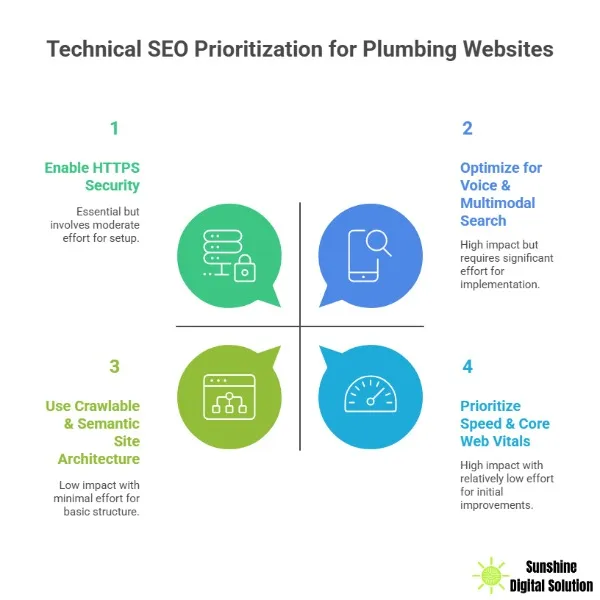 Key technical SEO tips to optimize plumbing websites for better search performance.
Let’s break it down step by step.
6.1: Prioritize Speed & Core Web Vitals
A fast-loading website keeps both users and Google happy. Google measures this through Core Web Vitals, which track how quickly your site loads, how stable it feels, and how soon users can interact.
Here’s a simple breakdown:
| Metric | What It Means | Ideal Target |
|---|
| LCP (Largest Contentful Paint) | Measures how quickly the main content loads. | Under 2.5 seconds |
| FID / INP (Input Delay) | How quickly the page reacts to clicks or taps. | Under 200ms |
| CLS (Cumulative Layout Shift) | Measures if page elements move around while loading. | Less than 0.1 |
Quick Tips
- Use the WebP image format to reduce file sizes.
- Minimize heavy scripts (like unused plugins).
- Use tools like PageSpeed Insights and GTmetrix to monitor performance.
6.2: Enable HTTPS Security
Security isn’t optional; it’s a trust signal. If your site still runs on “http://” instead of “https://”, both Google and LLMs may consider it unsafe. Make sure your hosting provider includes a free SSL certificate or install one via Let’s Encrypt.
Example:
https://sunshinedigitalsolutions.com/ — Secure ✅
http://sunshinedigitalsolutions.com/ — Not secure❌
6.3: Use Crawlable & Semantic Site Architecture
Your site structure should be easy for both users and search engines to navigate.
Here’s a visual breakdown:
| Level | Example URL | Purpose |
|---|
| Homepage | https://weserve.com/ | Introduces your business and links to the main service pages. |
| Service Pages | /drain-cleaning/ or /water-heater-repair/ | Focus on individual plumbing services. |
| Location Pages | /plumbing-services-in-mountlake/ | Targets local search intent and helps rank in nearby areas. |
| Blog Posts | /blog/how-to-prevent-pipe-leaks/ | Educates customers and builds authority. |
6.4: Optimize for Voice & Multimodal Search
Voice assistants (like Alexa or Google Assistant) and AI tools (like ChatGPT or Perplexity) rely on clear, conversational, and multimedia-rich data.
How to Optimize for Voice & Image Search
- Use natural, question-based headings like “How fast can a plumber arrive in Mountlake?”
- Add alt text and file names with your service + location (e.g., “water-heater-repair-mountlake.jpg”).
- Tag videos with local phrases such as “Drain cleaning in Mountlake Terrace.”
- Add an FAQ schema so Google can directly quote your answers in voice results.
By optimizing for both voice and visual content, you position your business for next-generation discovery, not just search engines but also AI-driven assistants.
📌
Smart Tip
If you need quick leads for emergency plumbing services, PPC can deliver immediate visibility, but it stops when the ads stop. Investing in long-term optimization through
SEO and PPC helps you understand how both work together to balance quick results with lasting organic growth.
Chapter 7: Local Link Building & Citations
Even with great content and optimized pages, your plumbing business won’t rank well without authority signals. In local SEO, that authority comes from local backlinks and citations of your business across trusted platforms.
These signals help Google and AI systems (like ChatGPT or Perplexity) verify your credibility and location-based relevance.
7.1: Build Local Partnerships
Local link-building is about earning genuine mentions, not just adding links for SEO. The goal is to build real community connections that naturally reference your plumbing business.
Here’s how:
| Local Partnership Idea | Example | SEO Benefit |
|---|
| Exchange mentions with nearby businesses | Collaborate with local hardware stores or home remodelers for referral links. | Earn local backlinks from relevant, trusted sites. |
| Sponsor or support community events | Sponsor a local charity run in Mountlake Terrace or a home maintenance fair. | Generates high-quality local backlinks from news sites and event pages. |
| Engage with neighborhood associations | Offer “Plumbing Safety Check” sessions for local homeowner groups. | Builds brand awareness and earns citations on community websites. |
Pro Tip: Use Google’s “Links” report in Search Console to track where backlinks come from, focus on local and relevant sources, not random global directories.
7.2: Get Listed on Local Directories
Local directories (or citations) are essential for establishing business identity and entity linking. Each listing tells Google and LLMs the same thing: “This business really exists here and serves this community.”
Here’s how to do it right:
| Step | Action | Example / Tool |
|---|
| 1. Fix NAP Consistency | Ensure Name, Address, and Phone number match exactly across all listings. | Google Business Profile, Yelp, Angi, Thumbtack, HomeAdvisor |
| 2. Add Service Descriptions | Include what you do and where, using natural local keywords. | “24/7 Emergency Plumbing in Mountlake Terrace, Washington.” |
| 3. Choose Proper Categories | Select categories that closely match your core services. | Primary: Plumber | Secondary: Drain Cleaning Service |
| 4. Add Media & Reviews | Upload your logo, team photos, and link your Google reviews. | Improves trust and click-through rates from directory listings. |
📌
Pro Tip
Join relevant community threads or home improvement subreddits to use Reddit for SEO. Sharing plumbing tips and answering repair-related questions can drive trust, backlinks, and referral traffic from real homeowners.
You can also use Quora for SEO by responding to plumbing-related questions like “how to fix a leaking pipe.” Linking to your website (where relevant) builds credibility and attracts local homeowners searching for expert advice.
Local SEO for plumbers isn’t a one-time setup; it’s an ongoing process of testing, tracking, and refining. To keep your plumbing business visible in Google, Maps, and AI-generated summaries, you need to regularly analyze data, adjust strategy, and measure real-world actions (like calls and quote requests).
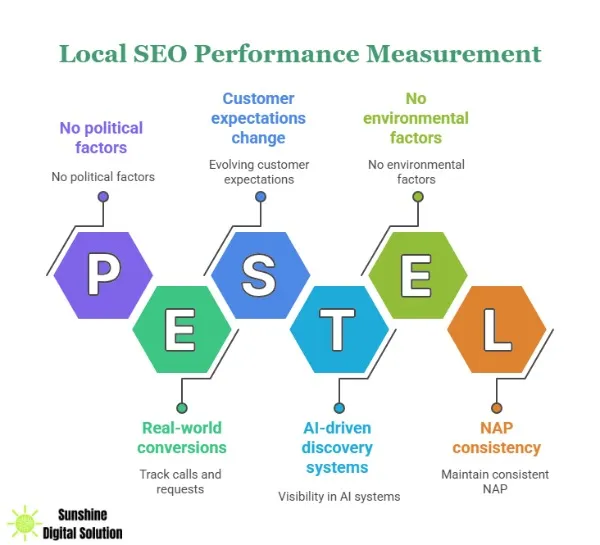 Tracking and measuring the local SEO performance of the Plumbing website to optimize online visibility.
8.1: Use Google Search Console & GBP Insights
Both tools give valuable insights about how people find and engage with your plumbing business online.
| Tool | Key Metrics to Track | Why It Matters |
|---|
| Google Search Console | Clicks, Impressions, CTR, Ranking Queries | Shows what search terms your website ranks for and which pages bring in the most traffic. |
| Google Business Profile Insights | Views, Calls, Direction Requests, Photo Engagement | Reveals how people interact with your listing on Google Maps and local search. |
💡 Pro Tip: Check which search queries show up under “Local Pack” or “Maps” results; those are high-intent opportunities to optimize your service and location pages.
8.2: Monitor Brand Mentions in AI Summaries
As AI-driven tools like Google AI Overview, ChatGPT, Perplexity, and Bing Copilot reshape search, it’s important to monitor how (and where) your business appears.
Here’s what to track:
| Platform | What to Check | Example |
|---|
| Google AI Overview | See if your website or GBP data appears in AI-generated summaries. | “Best plumbers near Mountlake” → see if Sunshine Plumbing appears in the overview. |
| ChatGPT / Perplexity | Search your brand and service keywords. | Ask: “Who are the top plumbers in Mountlake Terrace, WA?” |
| Bing Copilot | Monitor citations or summaries mentioning your business. | “Drain repair companies in Washington” → look for entity mentions. |
8.3: Track Calls, Direction Requests & LLM Visibility Over Time
Technical data is useful, but what really matters are real-world conversions, phone calls, messages, and customer visits.
How to Track Performance Effectively?
- Calls: Track how many come directly from your Google Business Profile or website CTA buttons.
- Direction Requests: Indicates high local intent people nearby actively want your location.
- AI Mentions: Periodically test AI tools to see if they list or describe your business.
- Analytics Setup: Use Google Analytics 4 (GA4) to track leads from Maps, organic, and LLM-related traffic.
8.4: Continuous Improvement Mindset
SEO is not static; algorithms evolve, LLMs get smarter, and customer expectations change. Make reviewing your performance a monthly habit.
Checklist:
- Update outdated pages or service information.
- Refresh GBP photos and Q&A monthly.
- Add new local blog content every quarter.
- Monitor ranking drops and recover with small updates.
- Keep your NAP consistent everywhere.
With consistent optimization of your content and monitoring, your plumbing business will not only rank locally but also stay visible in AI-driven discovery systems, the next frontier of local search.